
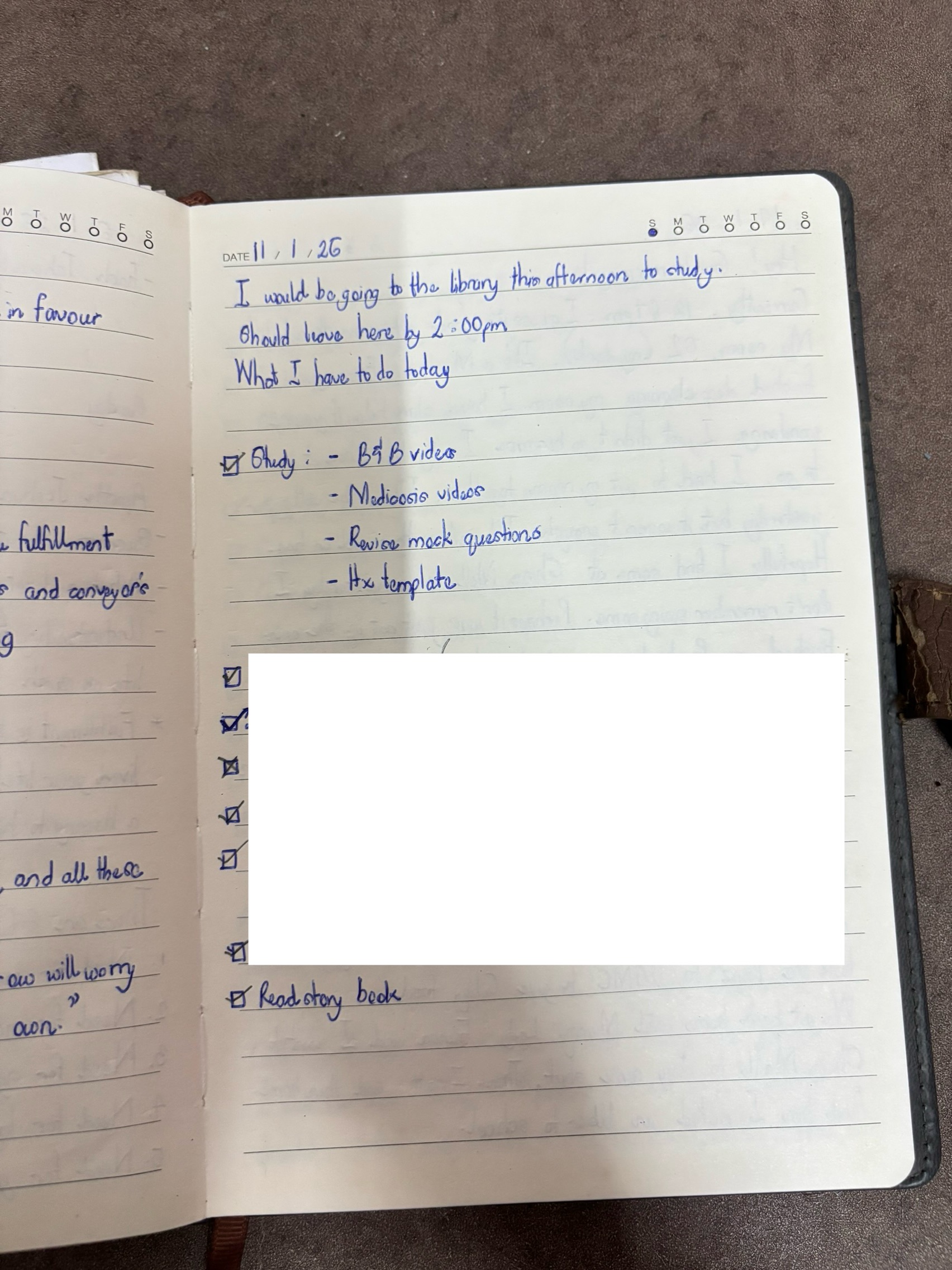
*To give this some texture and an honest, real-time glimpse into my journaling process, photos of a few journal pages have been woven throughout the post. They’re not meant to be polished or curated, just to offer a practical sense of how I write and what the process looks like for me, personally.*
I didn’t start journaling because I read a book or watched a video that convinced me to. And no one sold the idea to me. I just sort of started and frankly I can’t even wrap my head around a defining starting moment. I was 14 years old when I started journaling. I had no system, no structure and no intention beyond wanting somewhere to put my thoughts. I didn’t know it then, but that small decision would quietly become one of the most grounding habits of my life.
Every new year usually came with a new journal. Not as a ritual or sorts. It was just because one journal somehow lasted exactly a year. I still don’t feel old enough to say I’ve done anything for a decade, but here we are. And honestly, writing this doesn’t feel strange at all. It feels rather familiar.
When I first started journaling in 2014, my biggest problem in life was memorising my social studies textbook. That was it. That was the mountain. I had also just discovered YouTube, Alex Costa specifically, and I wrote down random lessons from his channel I thought might help me become better and basically more put together. Alex Costa and Jose Zuniga were a lifeline back in the day, the OGs know this.
In hindsight, it’s funny how small my worries were in contrast to what life presents now. But they mattered then. And that matters to me now. I guess that’s the paradox of perspective.
To-do lists from previous journals:
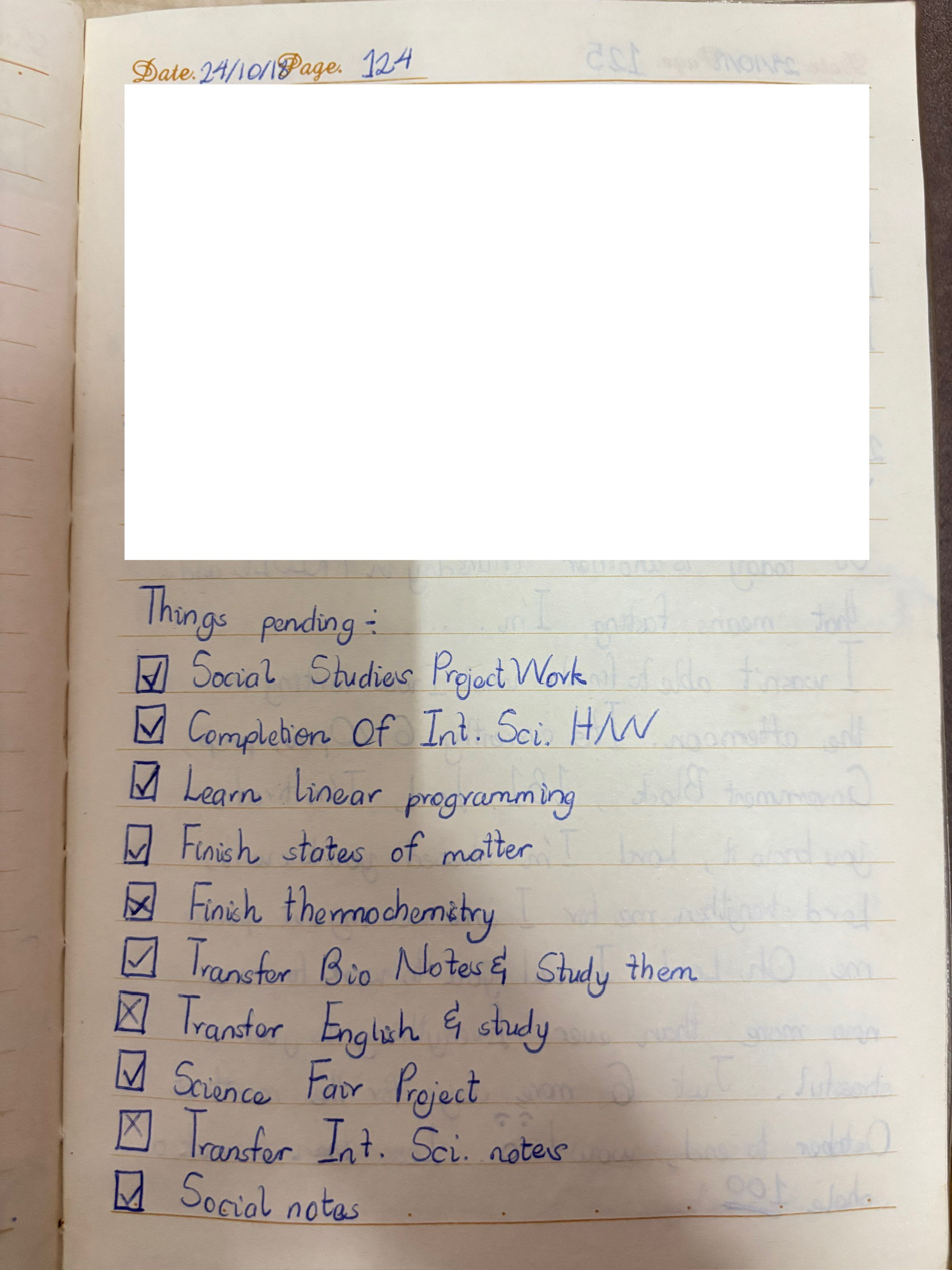
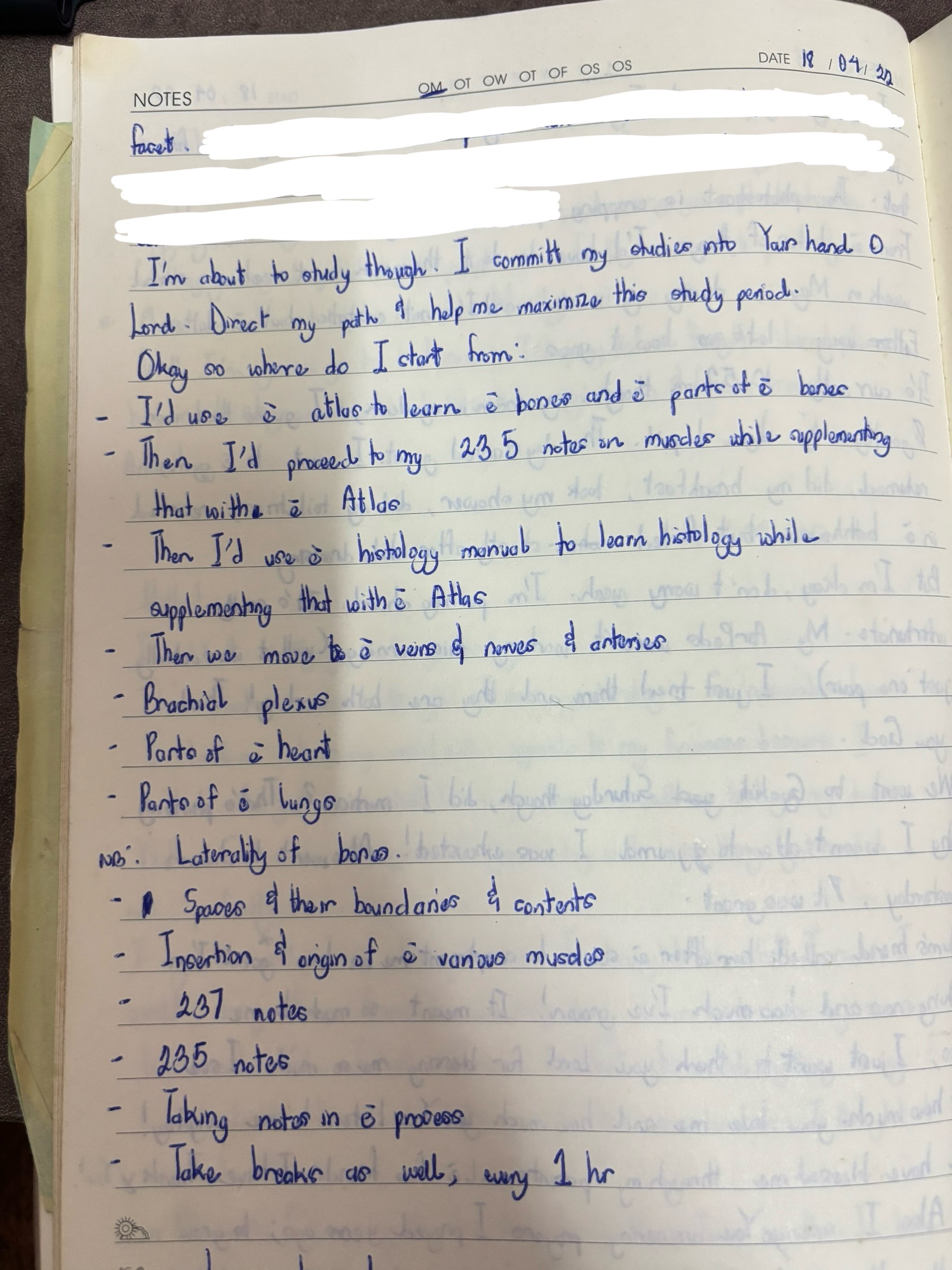
I’ve always been an overthinker. Running through anxious thoughts on repeat never helped much and so journaling became my quiet escape. My way of slowing the noise down. It was the one place I could be honest without being interrupted, corrected or misunderstood. And that’s the thing about journaling most people don’t realize. It’s not a place to perform. It’s a place to tell the truth. To be brutally honest about your feelings, decisions and actions because in that moment you’re the only one listening.
Over time, it became a mirror. And not a flattering one, suffice to say, but an honest one. At the end of each day, I’d take time to recap my actions an my conversations; where I went wrong, what I could’ve done better. It became easier when I approached my days without bias. When you step back and get a bird’s-eye view of your actions, you’re better positioned to evaluate yourself. Journaling helped me slow my thoughts down long enough to finally understand them. It helped me separate facts from feelings. It reminded me, over and over, that emotions, no matter how intense, don’t last forever.
When I read old entries now, I meet versions of myself I’d forgotten. The hopeful boy. The anxious one who needed everything to be perfect. The ambitious one who wanted it all at once. I still recognize parts of them in who I am today. And, strangely, that brings comfort. Though heavy on some days, those traits have anchored me in ways I’m quietly grateful for.
Personal timetables from my old journals:
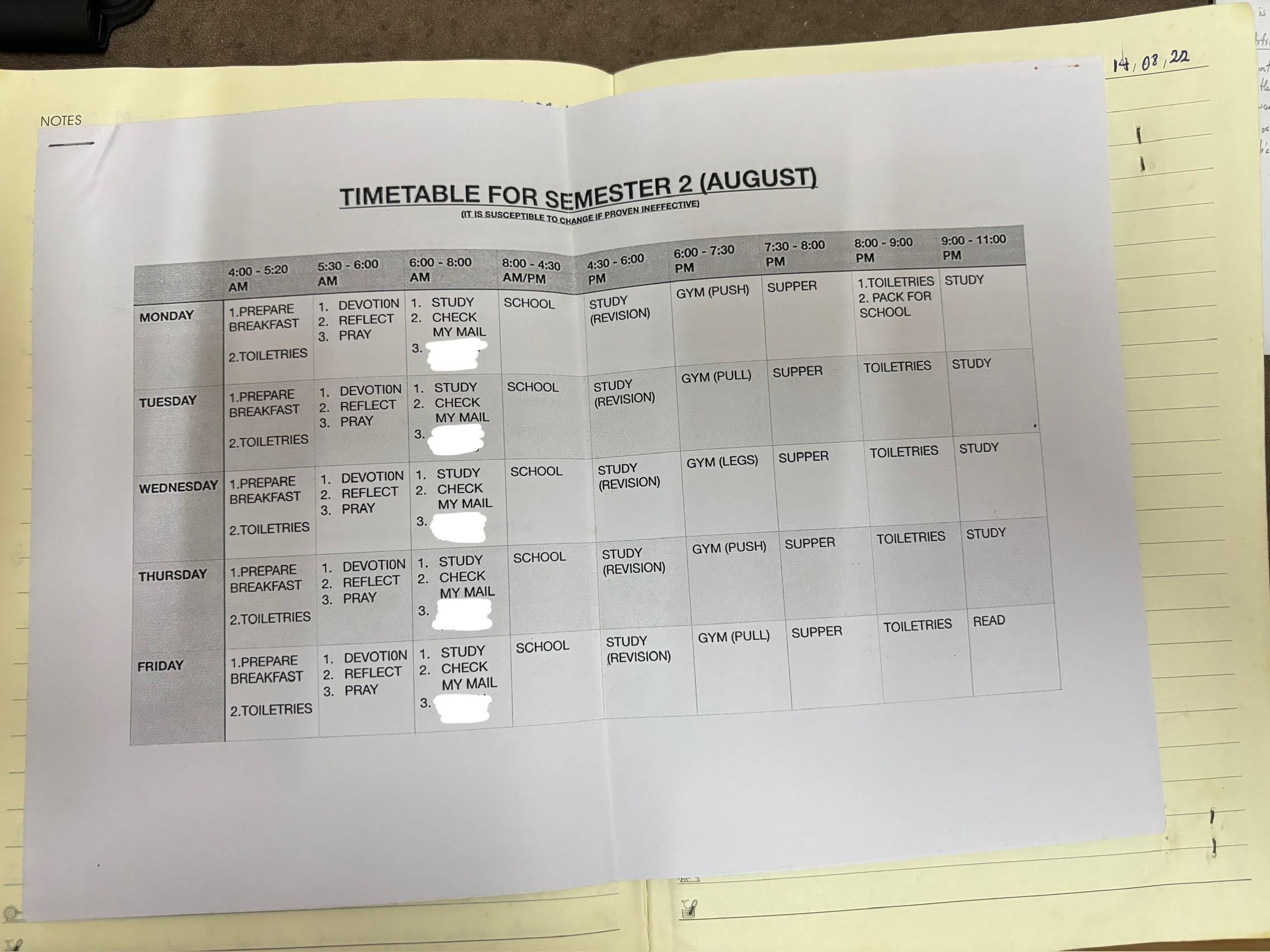
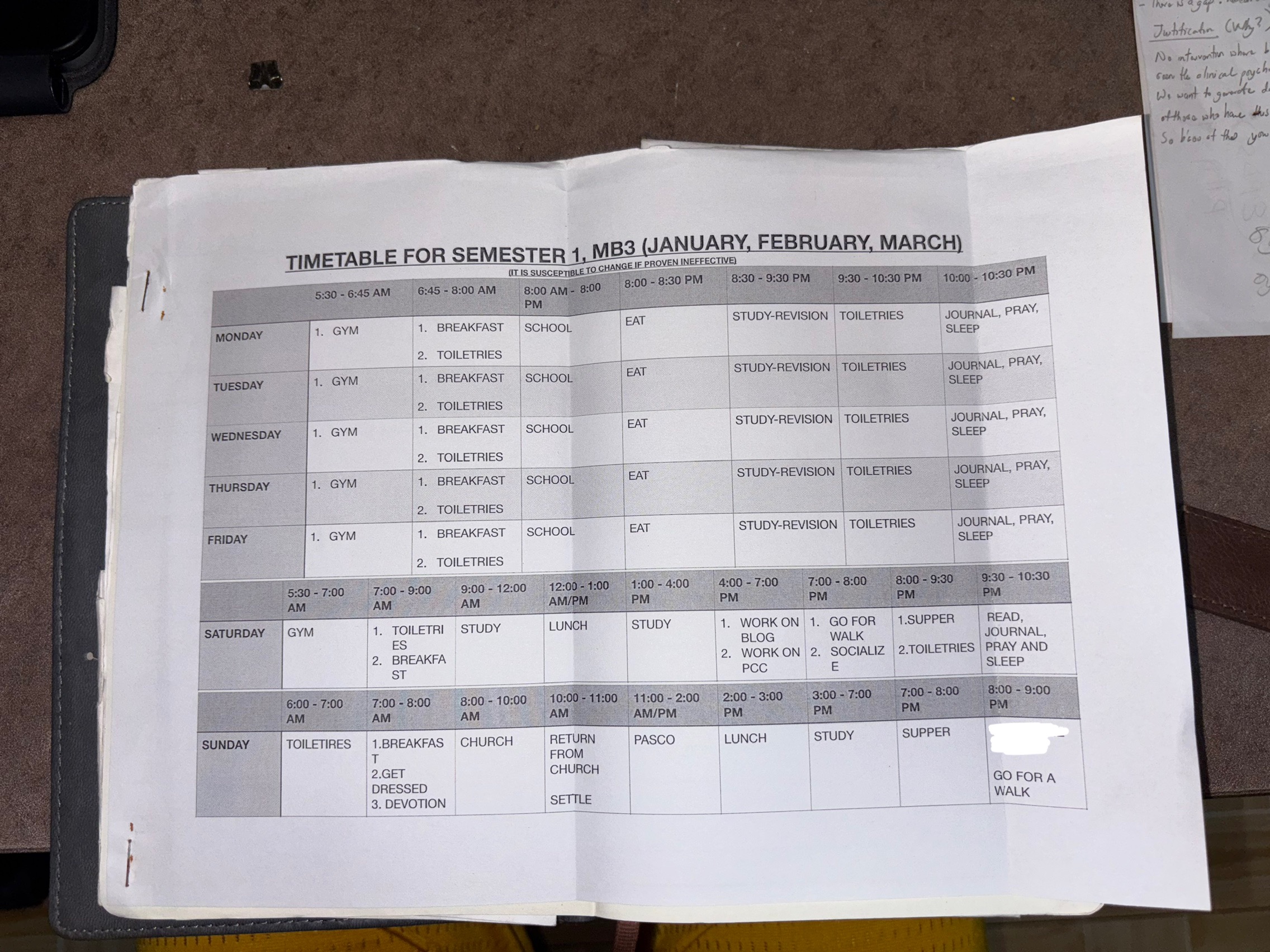
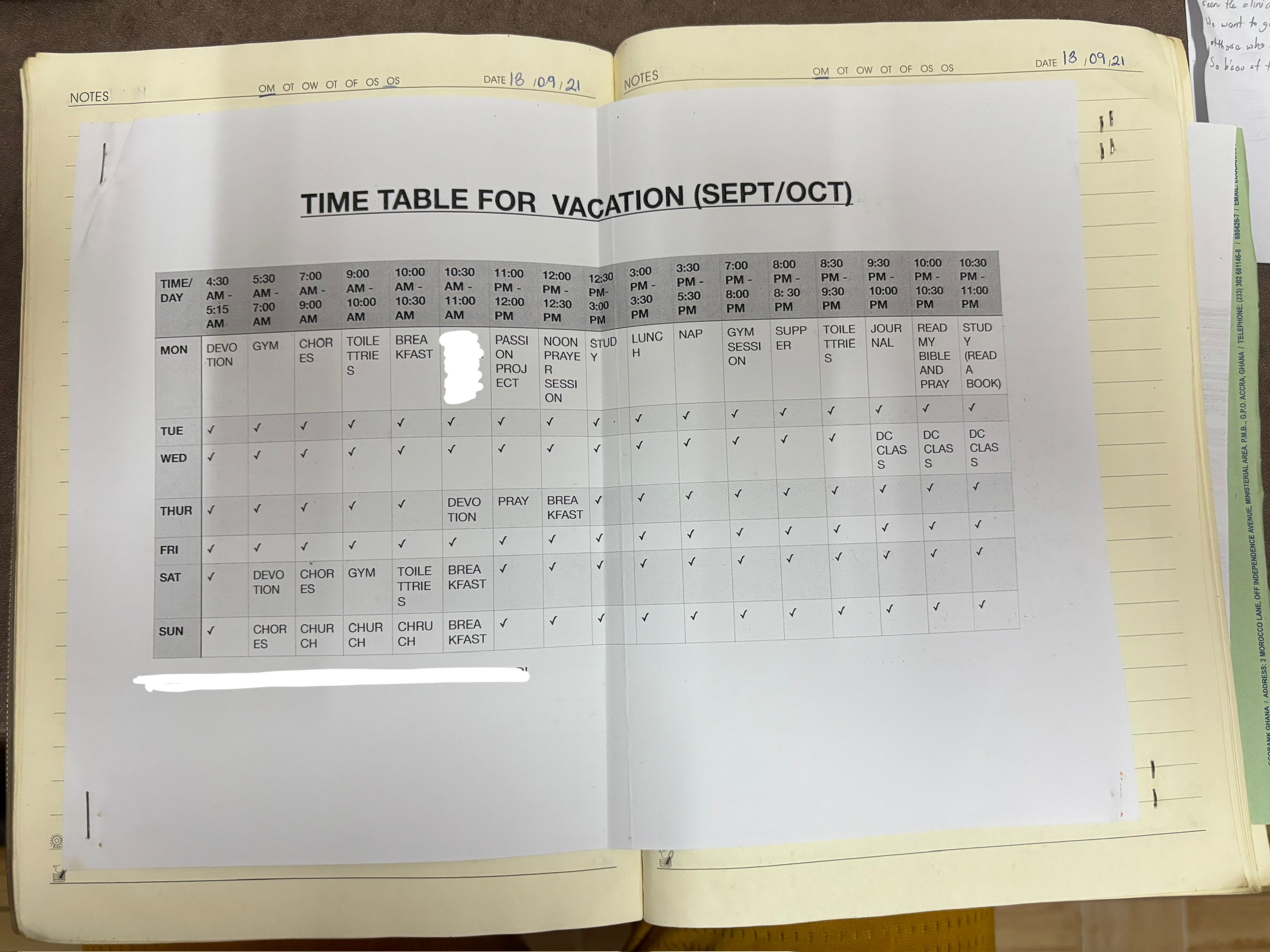
There are some months I’m consistent with my journaling, checking in every single day. Other months, I check in twice or thrice a week and there are some months I go without journaling and then I open my journal once and pour everything in. Like, okay here’s everything that has happened since the last time I checked in. Most pages of my journal are brain dumps; a recap of my day, interesting conversations or encounters I had during the day, to-do lists, half-formed thoughts or ideas, prayers, moments of revelry I wouldn’t want to forget or my habit trackers.
Habit trackers from previous journals:
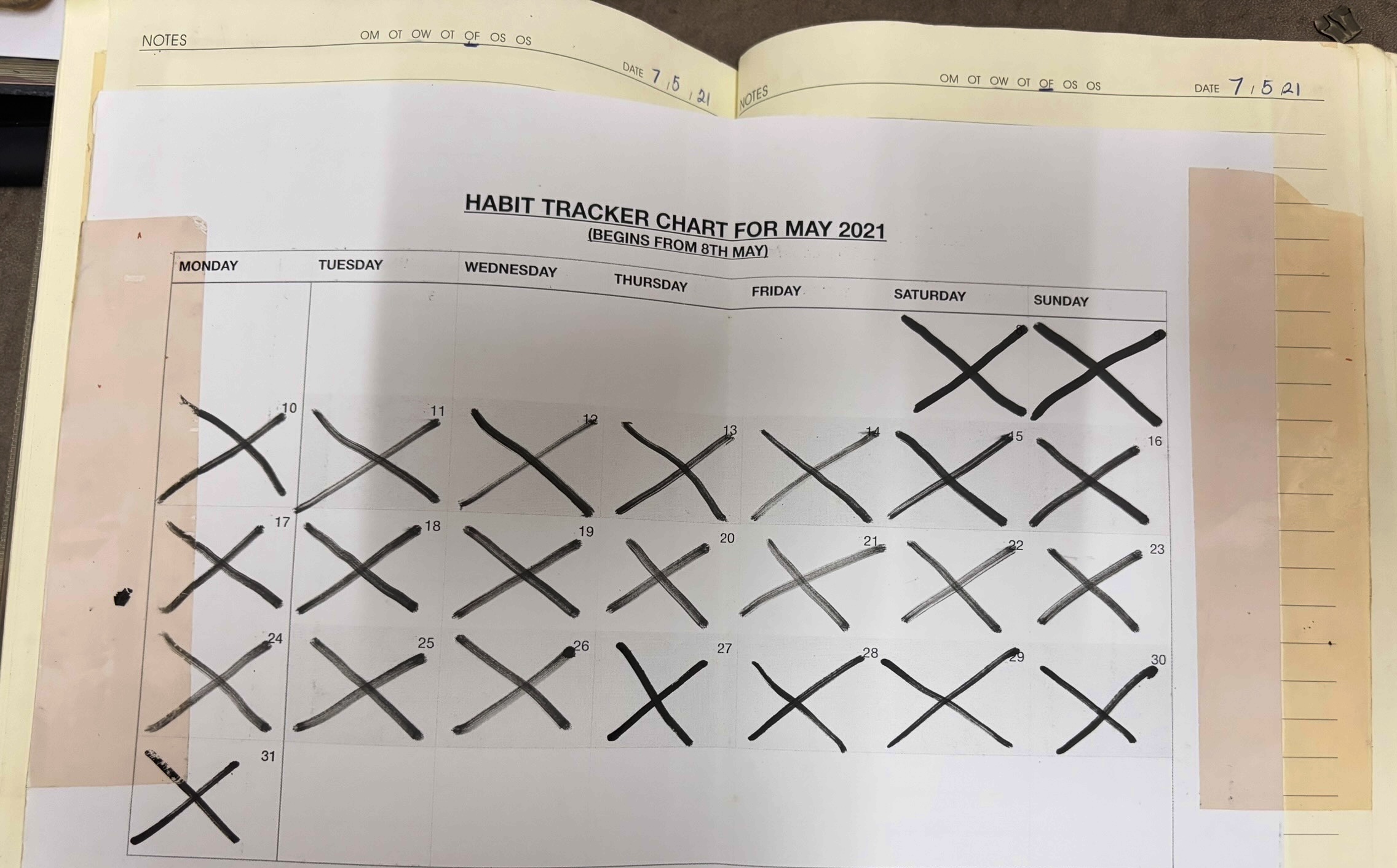
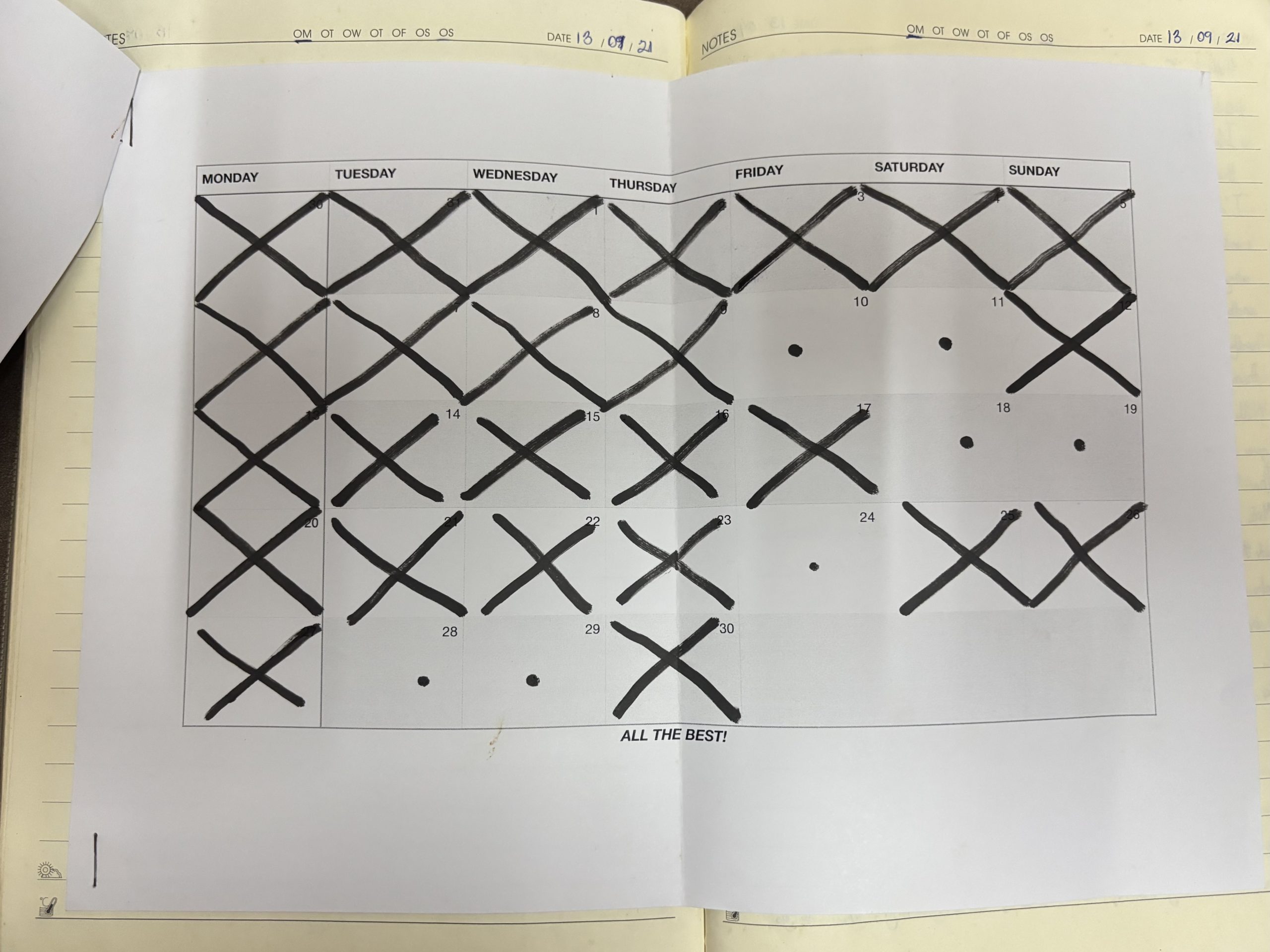
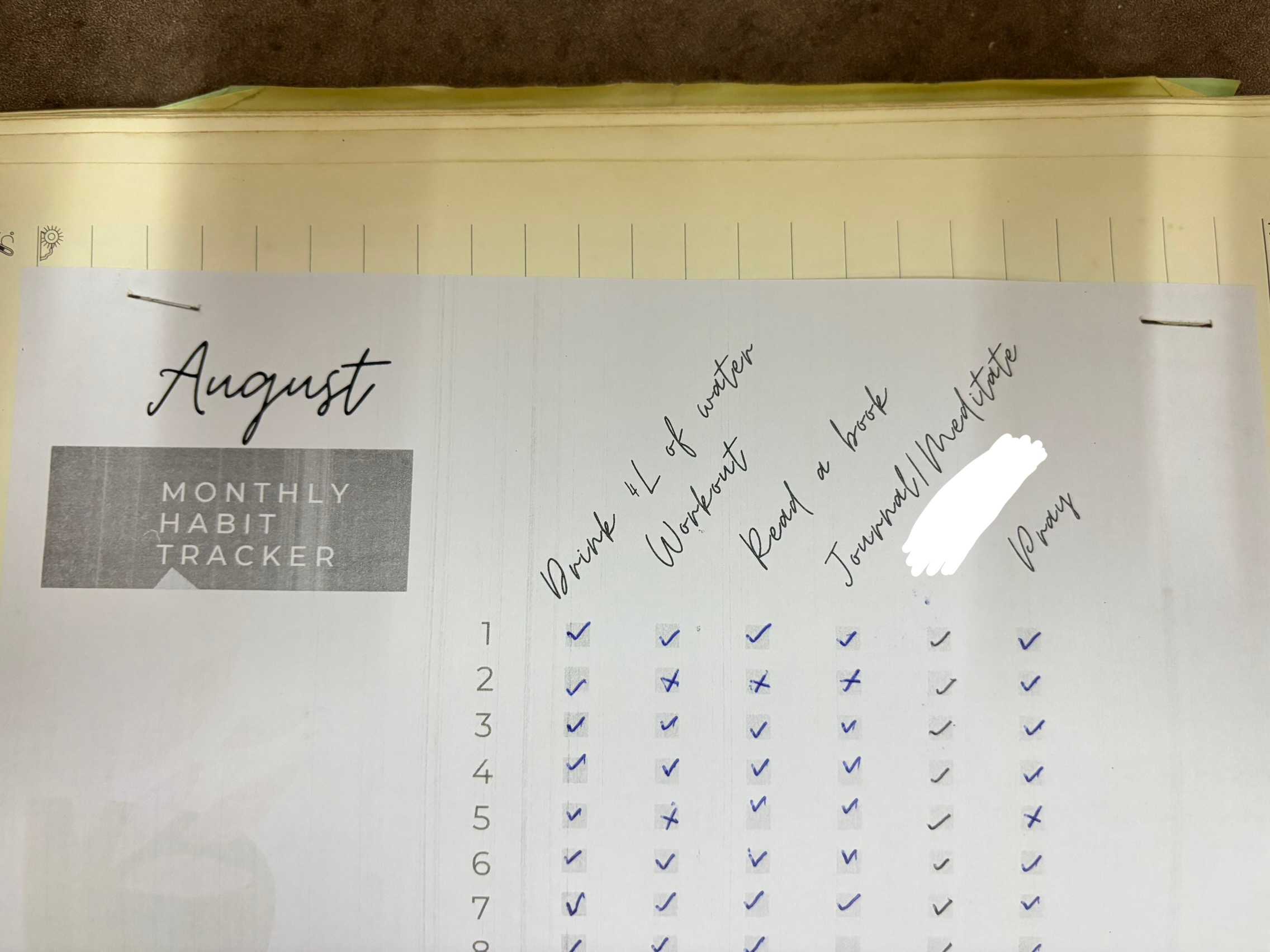
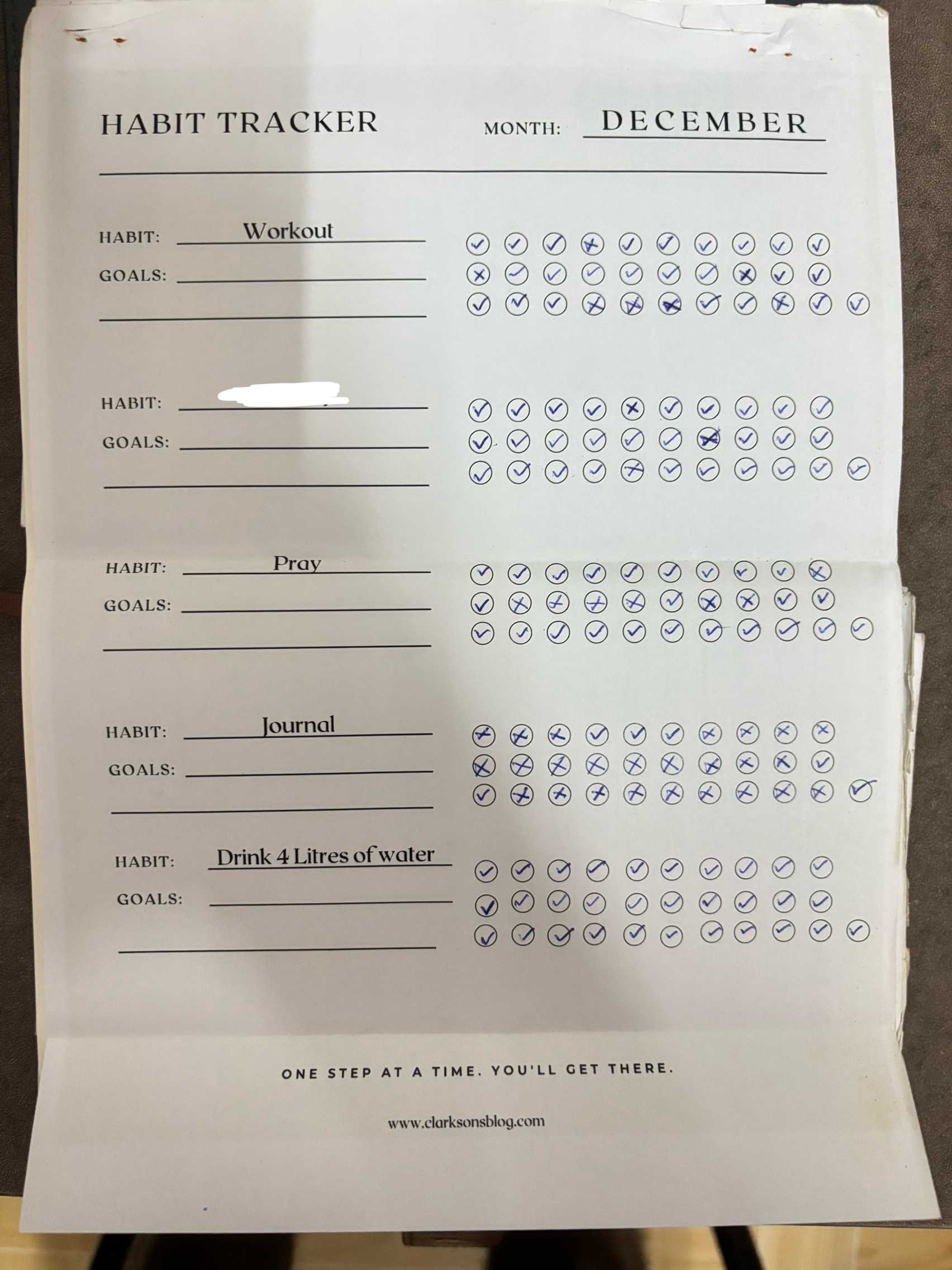
I’ve spoken often about my need for structure and routine. That need led me to design a habit-tracking system for myself back in 2021. I live by the idea that if you can’t measure progress, you’re mostly guessing. So I built a habit tracker to log whatever habit I’m trying to build or maintain. Every month, I print a fresh one, keep it in my journal and check it off at the end of each day. At the end of the month, I reflect and assess; what worked, what needs adjusting and where I fell short. My habit trackers are available in the shop www.clarksonduku.com/shop . Consider making a purchase; supporting my work while investing in your own growth.
Back from that quick commercial break…
Sometimes something happens during the day and I can’t wait to get home just to write it down simply because I don’t want to forget how it felt. Some may argue that’s what photos and videos are for but what I’ve realized is, photos and videos show you what life looked like. But journals show you what it felt like because memory edits itself, writing doesn’t. And don’t get me wrong, like most people, I obviously have lots of pictures and videos from throughout the years too. But these pictures and videos can never really capture how you were feeling or what you were thinking in that moment. No matter how much you try to remember, the act of recollection itself taints the memory. A phenomenon Dr Lisa Genova, a neuroscientist and author, explicitly explains in her book ‘Remember’. (Unfortunately I’m uncertain where it’s sourced. I borrowed a colleague’s copy).
Now, simply put, this phenomenon, memory reconsolidation, refers to the idea that every time you recall a memory, it becomes malleable, and when it’s stored again, it’s slightly altered due to your current emotions, beliefs and context. And so, essentially, memory is not a recording, it’s a reconstruction.
In my journals though, I can go back to exactly what I was thinking with the knowledge I had at the time, reading how I felt, what I thought and what stood out to me. Even though my memory of the moment may be different, I can look through the eyes of my past self for a second to really understand these different periods of my life.
I’m reading my journal now, it’s June 2024. So in 2024, I gave a TEDx talk. The week of the talk, I still hadn’t figured out my introduction. That same week, I had an exam and an election. Election on Tuesday, exam on Friday, talk on Saturday. I don’t think I’ve prayed that much in my life like I did in that week. But hey, somehow everything worked out. Writing through a week that felt tumultuous and chaotic, only to return later and see detail by detail, how something so daunting eventually ended in praise. It is forever a reminder that things can fall into place even when they feel impossible.
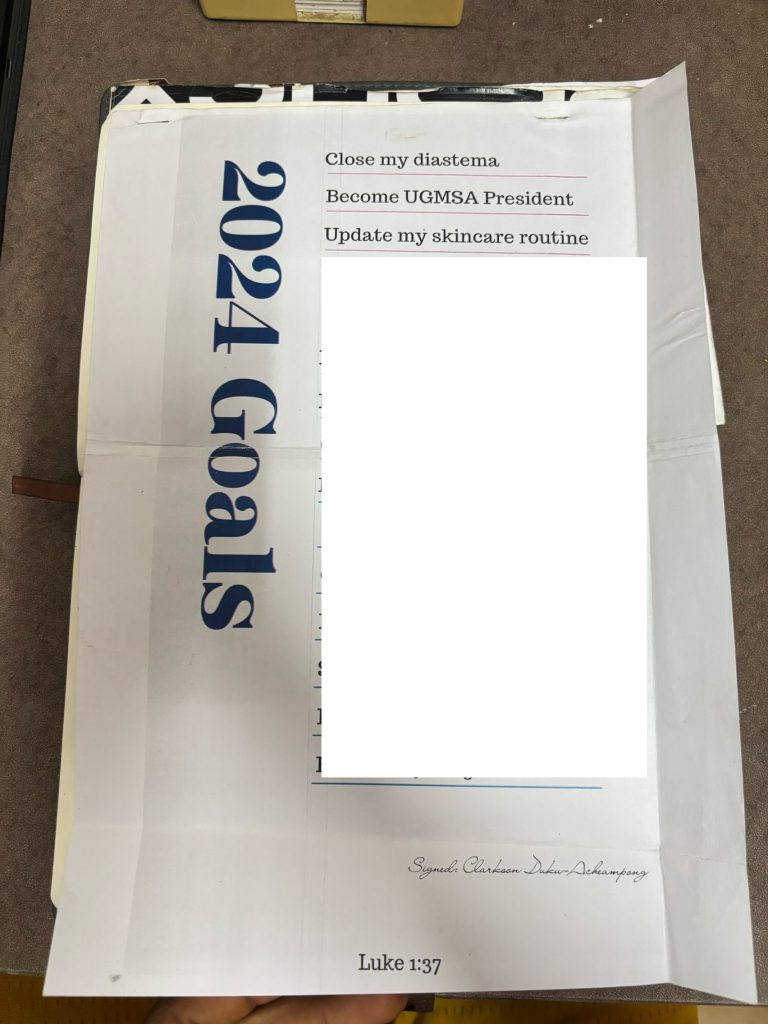
A small reminder: writing your goals down is a powerful way to make them real.
The more the time passes, the more I love reading back on these parts and seeing how my life has changed with the people around me. There are some names in my journal from ten years ago that still appear in my journal today. Others came into my life briefly but intensely, so intensely that entire entries were written about them.
In my earlier journals, sometimes I would refer to people by initials instead of full names. And one of the most bittersweet things I find happening when I go back to reread these journals is that, sometimes, an entire entry is written about someone so important to me, someone affecting my life so deeply, someone who was taking up every waking moment of my life at the time. And now, I don’t even know who those initials belong to.
It’s quite a sad feeling. But also comforting. Because it reminds me that things pass. Even the things we swear will never leave us.
Not everything resolves neatly, though. There are things I struggled with at fourteen that followed me at eighteen and still show up today. Anxiety, for one. Reading my journal now I see numerous moments younger me wrote to a future self, hoping life would feel lighter, hoping that they’re in a better place. And there’s present me reading past me’s struggles and being grateful that I can’t go back to fix things because truthfully, I don’t know how and I don’t want to. I may have answers to some things but I guess other things take longer than ten years to figure out. And that’s okay.

Journaling is very therapeutic and I can attest to that fact. Reading through my old journals, I realize that a lot of my journal entries happened when I was on the extremes of emotions. When I’m overwhelmed. When I’m hurting. When I’m grateful. And sometimes, when I don’t journal for a while, it’s actually a good sign.
My journaling has evolved through many phases over the years. Sometimes I write daily, sometimes weekly. Some entries are reflections, others are prayers, letters to myself, gratitude lists, to-do lists or hard questions. But recently, after years and years of writing, I’ve noticed that some of my favourite entries to reread are the ones that reflect on the good moments, the ones that recount and cherish how happy, how excited, how loved, how grateful I feel about something in my life at the time. It keeps me grounded, affirms me of what I’m capable of and steadies me through difficult moments. Like I already said, sure I might have pictures or videos of these moments too but I might not remember the little details of the day, the little moments that really make things memorable. Something might have happened since then, which would forever change my memory of that moment. So I particularly enjoy writing down the good moments too, not just the bad ones.
I don’t really know what these journals are for. I just started one day and now I’m here, right? No grand plan. No master strategy. Just a pen, a book and a decision. Some days it feels like I’m writing a memoir in real time. Documenting what could be considered the last year of my university experience, my entire journey through high school, through junior high school and probably beyond that too. Page by page, moment by moment. I’m sure there might be other uses for it in the future. Ones I can’t even think of yet but for now, it’s for me.
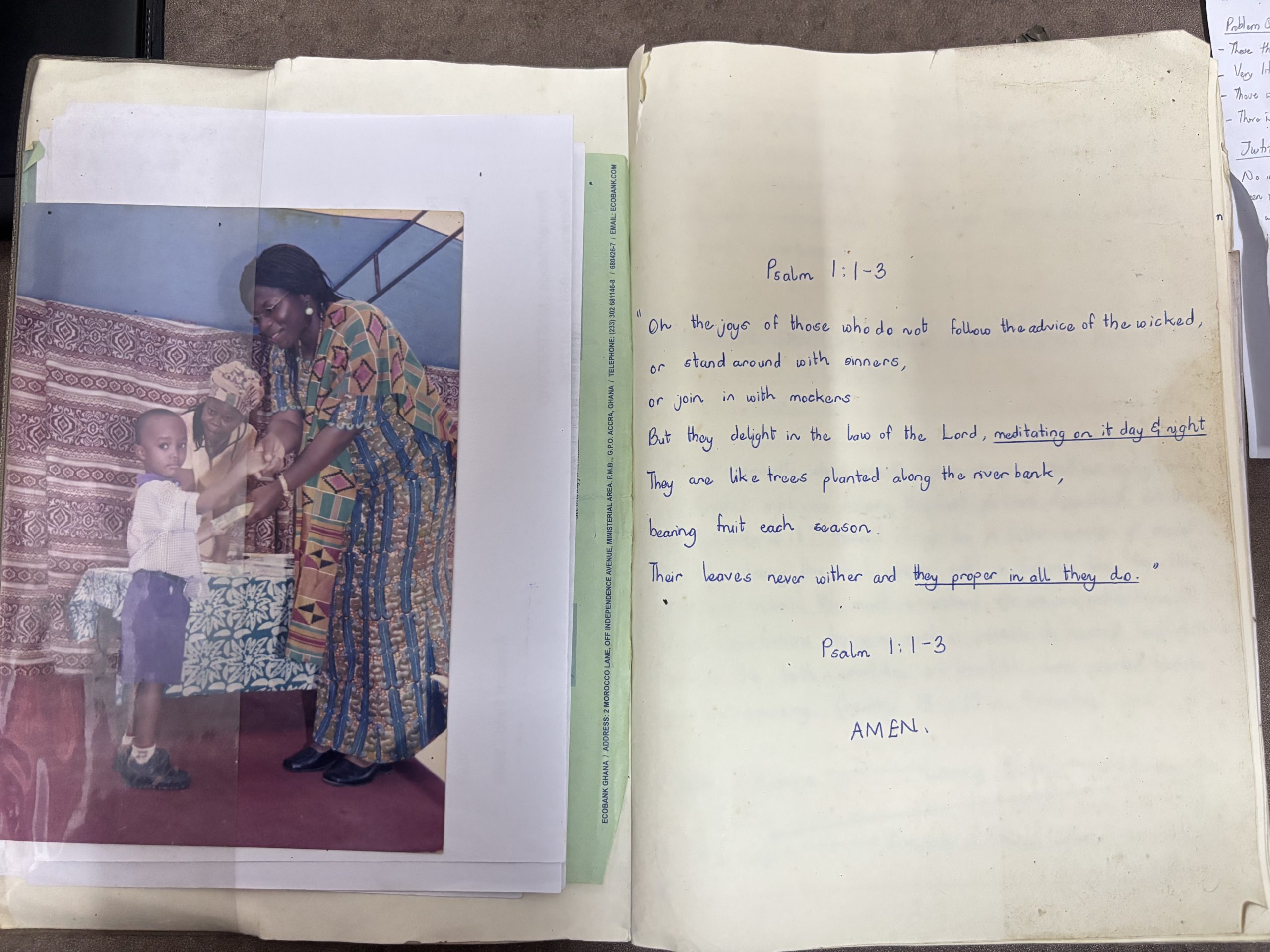
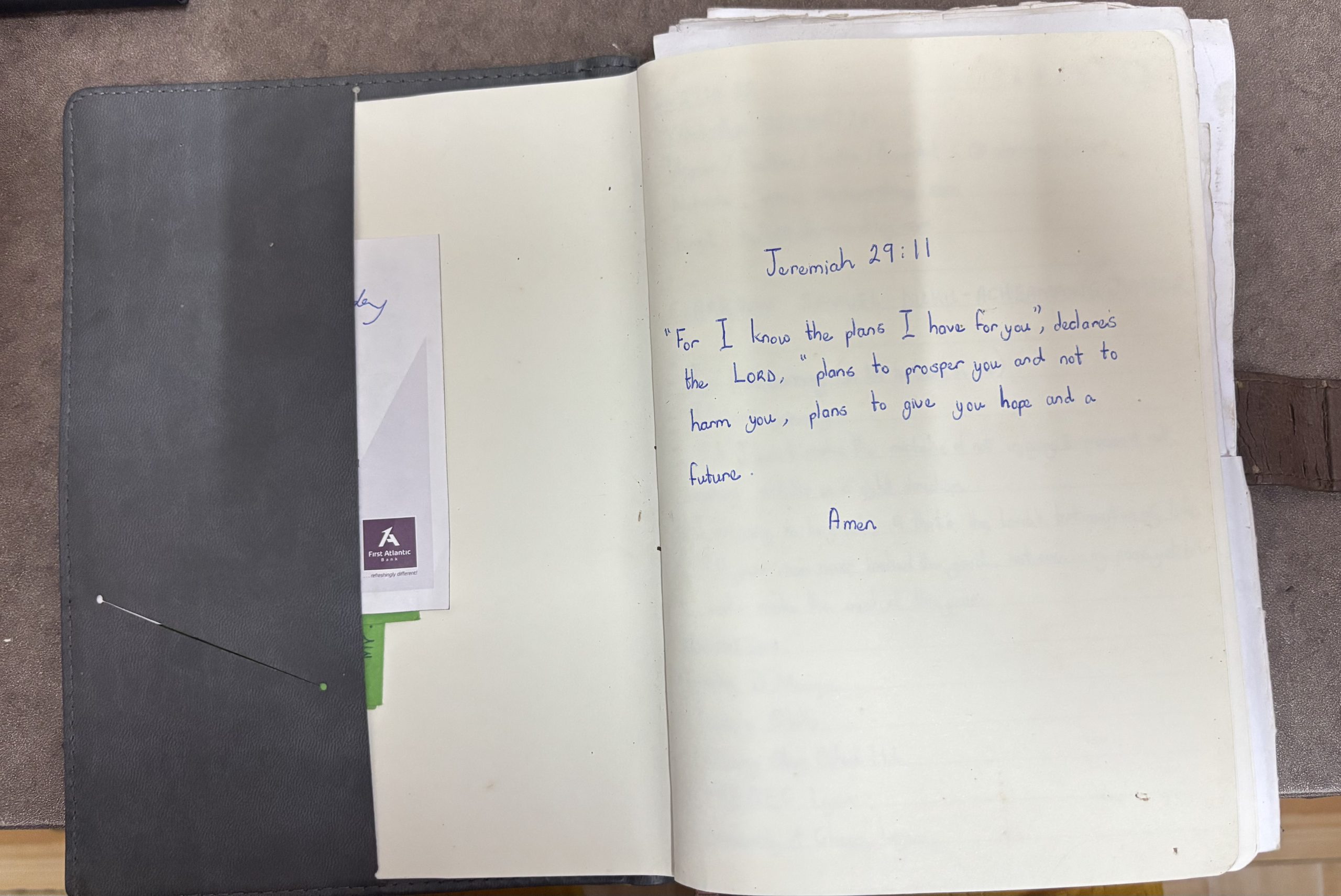
It’s for analysing. It’s for reflecting. It’s for stumbling upon advice I once gave myself and realizing I still need it. Sometimes, it’s for romanticising my life and honestly, I’ve learned that there’s nothing wrong with that. But most importantly, it’s for motivating myself. There’s something powerful about flipping through old pages and seeing proof that I’ve survived things that once felt impossible. Wins that felt insurmountable at the time, now sitting quietly in ink. That rush of perspective is often all the motivation I need on hard days. And I don’t see a reason why I would ever stop.
So here’s to a decade of writing. A decade of talking to myself. A decade of committing to understanding myself. And slowly but intentionally, a decade of committing to becoming the best version of myself, through and through.
Now if there’s anything I’d want you to take away from my experience with journaling, it’s these. Just these three things.
1. Self awareness: Journaling taught me self-awareness because the more I journaled, patterns began to emerge. I noticed how I responded to stress, how often fear disguised itself as procrastination, and how growth was rarely loud.
2. Clarity: One of the most unexpected gifts of journaling has been clarity about who I am and what I stand for. Writing consistently forced me to confront my values. It revealed what mattered to me long before I could even say it out loud.
3. Growth: Journaling taught me that becoming is an ongoing process. You are allowed to evolve. You are allowed to change your mind. You are allowed to outgrow old versions of yourself. In fact, you’re supposed to. Because investing consistency in a version of yourself that no longer fits is resistance disguised as discipline.
That’s it. Three things. Don’t forget them.
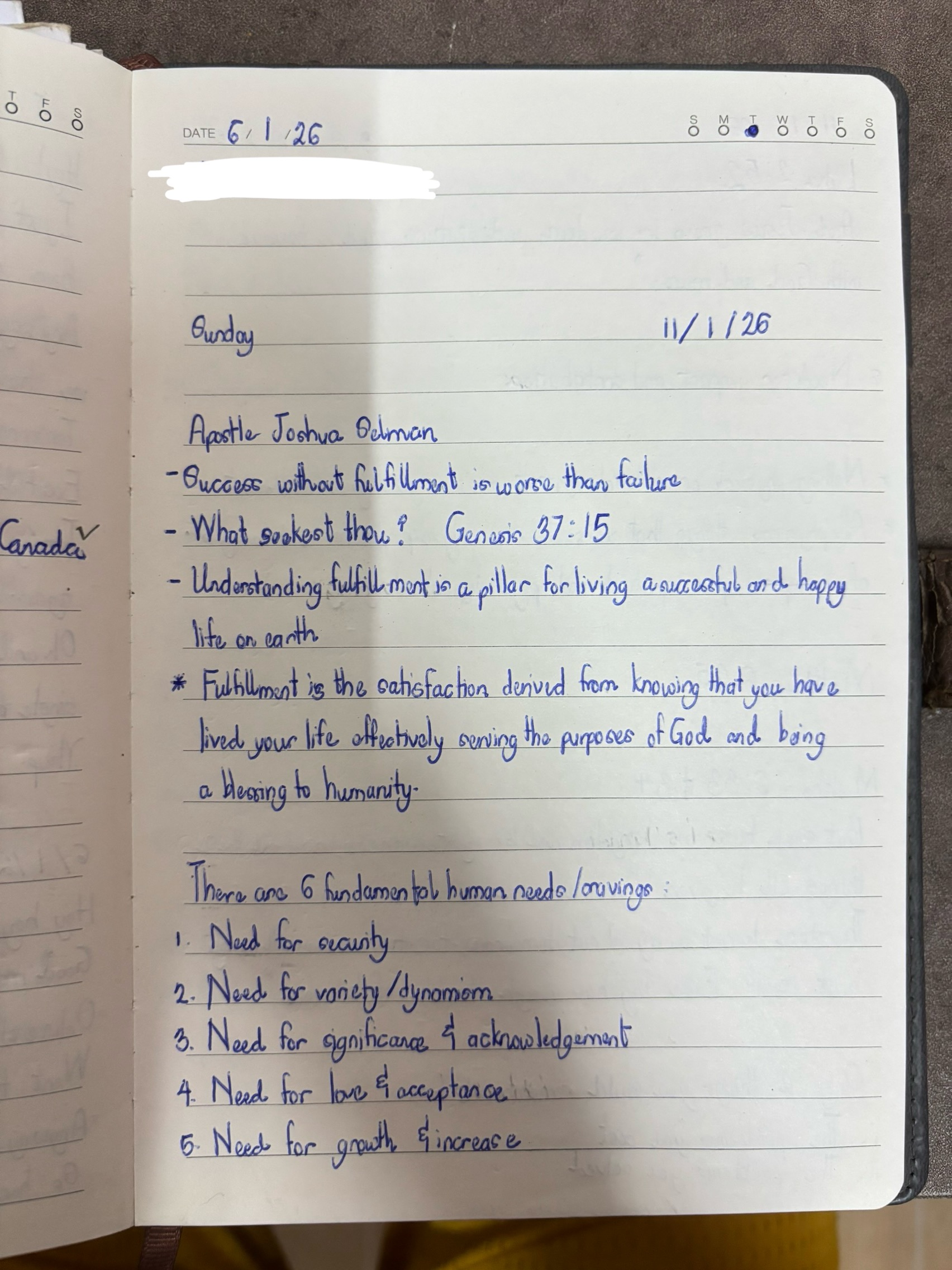
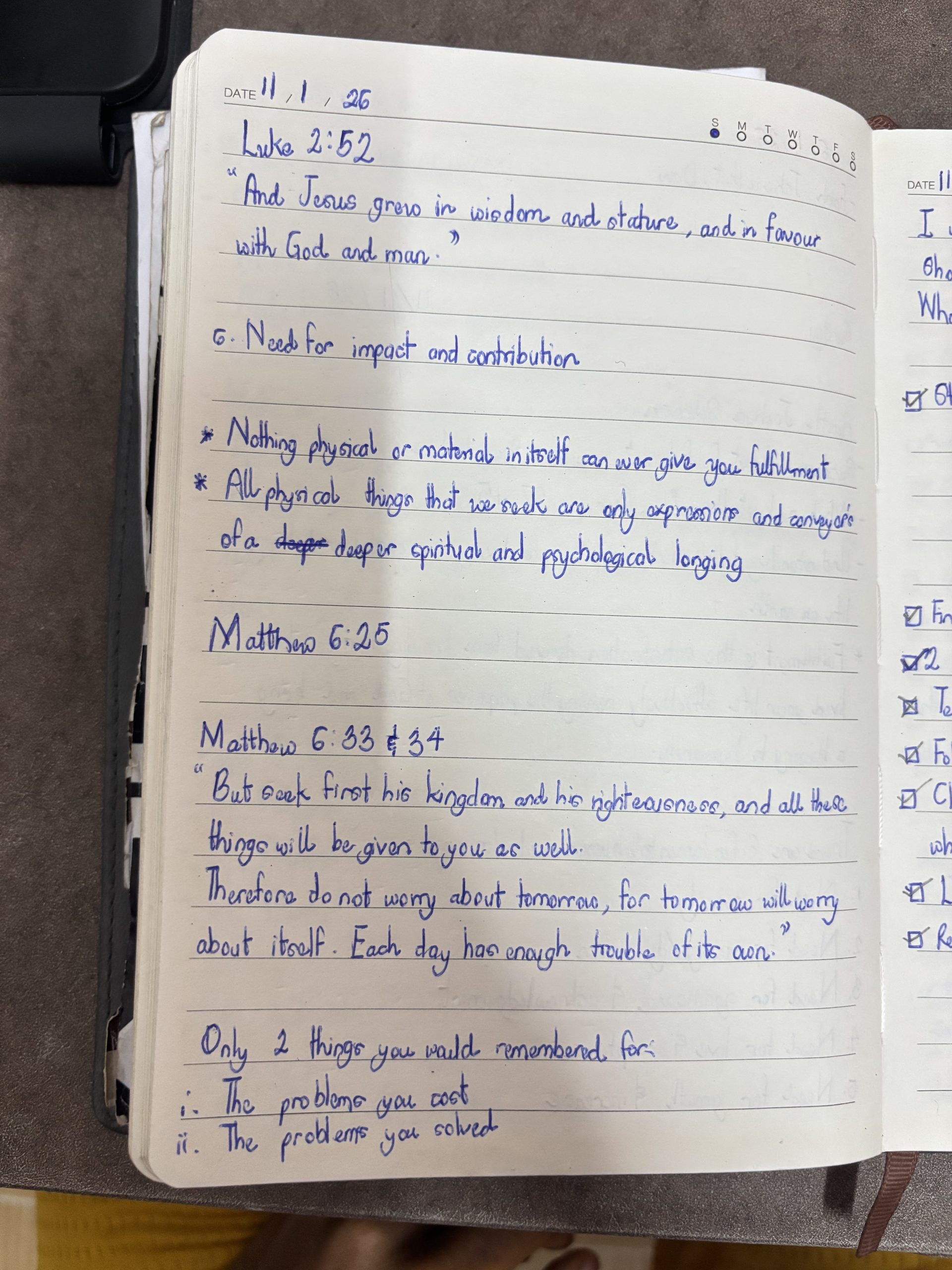
I still journal because it keeps me grounded. Because it helps me listen to myself before the world tells me who to be. Because it documents my journey in a way memory never could. Most importantly, journaling reminds me that my inner world deserves attention, care and respect. And if you are considering journaling here is my advice to you, “Write to remember who you are, especially on days the world tries to make you forget.”
Some days, journaling is one sentence. Other days, it is several pages. Both are enough. What matters is showing up. Start small. Start messy. Start honestly. You do not need verbose words. You only need truth.
If you made it to the end, thank you. These posts take a lot out of me and it genuinely means a lot that you’re here. I’m looking forward to sharing whatever self-experiment journey I have been on or yet to take on. If this resonated or helped in any way, feel free to leave a like, share a thought in the comments, or pass it along to someone who might need it. It goes a long way in supporting this space. If you are also in the habit of journaling or not and have questions, thoughts or suggestions, you can leave them below or reach me via the contact page ([email protected]). l’ll get back to you as soon as I can. Also, please consider subscribing to my mailing list below if you haven’t already.
Thank you again, wishing you a steady year.❤️
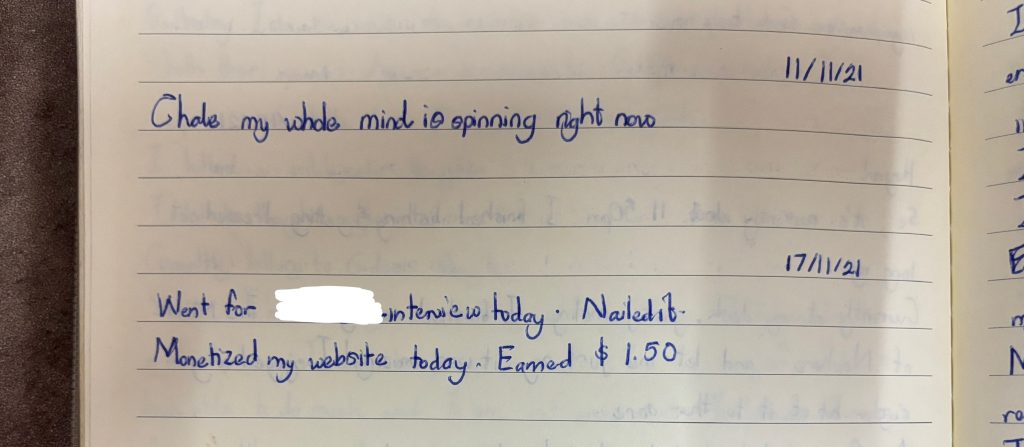
11/11/21 lol legendary!!
But like I always say, you’ve got this; even when it doesn’t feel like it sometimes. Everything will fall into place in the end, so take your time, enjoy every moment of the journey, and don’t forget to have a blast while you’re at it 😉
11/11/21, that really is legendary 🤣🤣
And thank you for this. I appreciate the reminder. It’s easy to get caught up trying to control everything, but you’re right. Sometimes the best thing we can do is trust the process, take things one step at a time and enjoy the ride while we’re at it.
I don’t know how to explain it, but journalling is the best thing you can do to save yourself. Journaling has stopped me from running mad (I mean this literally); curtails my anxiety; makes me more honest with my subconscious; I am able to state the unsaid things I’m scared of.
Thank you for sharing this so honestly. I understand exactly what you mean. Journaling has a way of giving our thoughts somewhere safe to land, especially the ones we struggle to say out loud. I’m really glad it has been that outlet for you. Sometimes the act of writing things down is what keeps everything from becoming too overwhelming.